Arnaud Clement

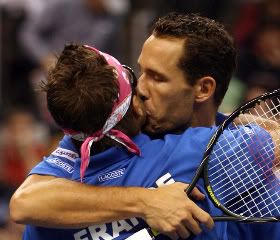
Arnaud Clément (born 17 December 1977) is a professional tennis player from France. His best achievement is reaching the final of the 2001 Australian Open.


Arnaud Clement Great Shot

Arnaud Clement Act
Arnaud Clement Hits The Ball
Arnaud Clement Expression When He Got a Score
Arnaud Clement and Trophy
Arnaud Clement and His Racket
Arnaud Clement Great Moment
Arnaud Clement Love Tennis Very Much
Arnaud Clement Cute Smile

Camilo Villegas

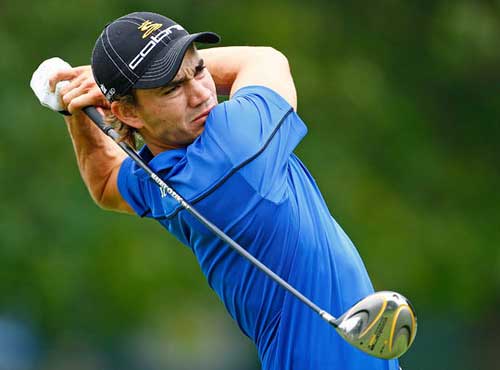
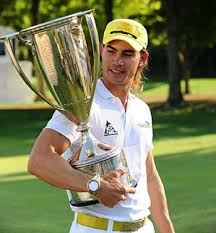
Camilo Villegas was born in 7 January 1982. He is a Colombian professional golfer who plays on the PGA Tour and the European Tour. Villegas was born in Medellín, Colombia, and took up golf as a child. After several different National Junior Championships in Colombia in the ages between 8 and 15, at 16 he became the first player in Colombian golf history to win the Amateur's Grand Slam in the same year: The National Junior Championship (stroke play), the National Junior Championship (match play), the National Amateur Championship, and the Colombian Open in the amateur category. Then, in 2001, he became only the second player to win the Colombian Open as an amateur. His success in Colombian golf throughout the 1990s earned him the distinction of "Player of the Decade" issued by the Colombian Golf Federation. Villegas received an athletic scholarship to attend the University of Florida in Gainesville, Florida, where he played for coach Buddy Alexander's Florida Gators men's golf team in National Collegiate Athletics Association (NCAA) competition from 2001 to 2004. As a freshman in 2001, Villegas was a member of the Gators' 2001 NCAA championship team. During his college golf career, he was a four-time All-American, the Southeastern Conference (SEC) Freshman of the Year in 2001, and SEC Player of the Year in 2002 and 2004. Villegas graduated from Florida with a bachelor's degree in business administration in 2004.

Villegas is known for his commitment to physical fitness, and says his mentor and inspiration is golf icon Gary Player. They have just starred together in a new MasterCard "priceless" commercial. In the June 2006 issue of Golf Digest, he was named "the sexiest player on tour, Tiger Woods included." He has also gained notoriety for sporting flashy dress clothing by designer J. Lindeberg. An alumnus of the University of Florida, Villegas frequently visits the University of Florida golf course when he is spending time at his residence at Gainesville, Florida. Villegas began playing on the PGA Tour in 2004 and earned his PGA Tour card just prior to the 2006 season. He had a blistering start to his 2006 rookie year on tour, with two second place finishes and a third place (at The Players Championship) in his first nine events.

He missed making the 2006 Masters Tournament in his rookie year by a single position on the Official PGA Tour Money List (11th). However, he made his first Masters' appearance in 2007 by finishing in the top 40 of the Official PGA Tour Money List for 2006. He qualified for the 2008 Masters through his exceptional play during the inaugural FedEx Cup playoff system, that included an opening round 63 (8 under par) at the Deutsche Bank Championship and three straight top 10 finishes. He entered the FedEx Cup playoffs in 52nd place and improved to 28th place through his play in the first three events, thus qualifying for the 30-man field at The Tour Championship in Atlanta, Georgia, where he finished in the top 10 for the third straight week and finished 24th on the FedEx Cup points list. Villegas won his second professional event at the Coca-Cola Tokai Classic on the Japan Golf Tour in September 2007. By doing so, he earned ¥24,000,000 (approximately $208,272). He shot a score of 282 (-2) and defeated Toyokazu Fujishima in a playoff by draining a 20 foot putt on the winning hole.

In 2006 Camilo signed an endorsement deal with Red Bull, and has represented the energy drink company since then as their sole PGA Tour golf athlete. Villegas won his third professional event at the TELUS Skins Game in June 2008 where he defeated a field that included Greg Norman, Colin Montgomerie, Mike Weir and "Mr. Skins", Fred Couples. Villegas took six skins for $130,000 with a short birdie putt on the 14th hole, and then won an additional four skins for $100,000 in a playoff, which was decided with a closest-to-the-pin shootout from 130 yards out on the 18th hole. Villegas recorded a record-breaking second round in the 2008 Open Championship. He shot 65, which was the lowest score for any Open Championship second round at Royal Birkdale. He started off with two bogeys but ended with five consecutive birdies which put him at 5 under for his round. Villegas won his first PGA Tour title in September 2008, winning the BMW Championship by two shots over Dudley Hart. For the last 44 holes of the tournament, Villegas did not three putt, one-putting 27 of those last 44 holes. This victory took him to a career high of 18th in the Official World Golf Rankings.

Villegas followed his BMW Championship win with a victory in The Tour Championship. He beat Sergio García in a playoff, having trailed by five shots going into the final round. The win took Villegas to number seven in the Official World Golf Rankings and established him as the highest ranked golfer from South America. He finished the season 7th on the PGA Tour money list. In late 2008 Villegas joined the European Tour, making his first European Tour appearance at the 2008 HSBC Champions, the first tournament of the 2009 season. However he will continue to play predominately in the United States. He had no victories in 2009 but had five top-10 finishes and ended the season ranked 45th on the PGA Tour money list and in the top 30 of the European Tour's Race to Dubai. He has spent over 30 weeks in the top-10 of the Official World Golf Rankings since 2008. At the 2009 Chevron World Challenge, Villegas made a very rare albatross (double eagle) on a 568 yard par 5, firing a 262 yard second shot into the hole. In March 2010, Villegas earned his third victory on the PGA Tour, winning The Honda Classic by five strokes over Anthony Kim. Villegas' tremendous physical power allows him to drive the ball far away from the tee box, averaging 302.1 yards in the 2006 season. He also adapts a homemade putting routine: while he reads a putt, he crouches down parallel to the ground without touching it, extending his left leg back while balancing with his right leg and his putter to get a better view of the slope of the green. He is given the nickname "Hombre Araña" (Spiderman) for this posture.

Villegas was chipping up the slope to the 15th green when the ball twice rolled back toward him. The second time, Villegas walked over and casually swatted away some loose pieces of grass in front of the divot as the ball was still moving down the slope. That is a violation of Rule 23-1 that says, "When a ball is in motion, a loose impediment that might influence the movement of the ball must not be removed." The penalty is two shots. Villegas opened with a 72, and he was disqualified for signing an incorrect scorecard. White found a decision in the rules that allowed for no penalty if the player did not realize the ball would wind up where the loose impediment was removed. That didn't apply in this case because the ball was clearly coming down the steep slope toward his divot.

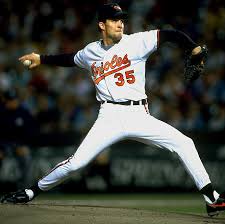
Mike Mussina

Michael Cole Mussina was born in December 8, 1968, nicknamed Moose. He is a former Major League Baseball right-handed starting pitcher. He played for the Baltimore Orioles (1991–2000) and the New York Yankees (2001–2008). Mussina spent his entire career in the competitive and high-scoring American League East, won at least 11 games in 17 consecutive seasons – an American League record – and recorded a career .638 winning percentage. Among pitchers, he ranks 33rd in all-time wins (270), 33rd in games started (535), 66th in innings pitched (3,562.2), and 19th in strikeouts (2,813). A five-time All-Star and seven-time Gold Glove winner, Mussina's consistency resulted in six top-five finishes in the voting for his league's Cy Young Award. Mussina was born in Williamsport, Pennsylvania. At Montoursville Area High School in Montoursville, Pennsylvania he had a 24–4 record with a 0.87 ERA for his baseball team. He also excelled in football and basketball. As a high school senior, Mussina barely missed being valedictorian of his graduating class. According to some reports, he intentionally came up short to avoid delivering a commencement speech. Mussina was drafted by the Baltimore Orioles in 1987 but chose to attend college rather than sign. Mussina was born in Williamsport, Pennsylvania. At Montoursville Area High School in Montoursville, Pennsylvania he had a 24–4 record with a 0.87 ERA for his baseball team. He also excelled in football and basketball. As a high school senior, Mussina barely missed being valedictorian of his graduating class. According to some reports, he intentionally came up short to avoid delivering a commencement speech. Mussina was drafted by the Baltimore Orioles in 1987 but chose to attend college rather than sign.

In three years at Stanford University, Mussina compiled a 31–16 record with a 3.89 ERA. He made two College World Series appearances and was selected as an All-American. His senior year in 1990 was his best, finishing 14–5 with a 0.99 ERA before being drafted again by the Baltimore Orioles, this time as a first round pick (20th overall). Mussina graduated from Stanford in 1990 with a degree in economics. He was a member of the Delta Tau Delta fraternity. In 1992, Mussina's first full season with the Orioles, he finished with an 18-5 record and a 2.54 ERA in 241 innings. His .783 win-loss percentage was tops in the league, and his 1.79 BB/9 was second best behind Chris Bosio. His 4 shutouts were tied for 2nd in the league behind only Boston's Roger Clemens. He finished 4th in the American League Cy Young Award voting that year, and was elected to 1992's All-Star Game, pitching one perfect inning. Mussina struggled in 1993 due to shoulder soreness, which placed him on the DL from July 22 to August 19. Nonetheless, he managed to win 14 games while posting the 7th best winning percentage in the American League. Mussina also allowed 83 earned runs in only 167.2 innings of work for a 4.46 ERA while striking out 117 batters. He was voted onto the All-Star team, however he did not pitch in the game.

There was a controversial incident toward the end of the game when Mussina chose to warm up in the bullpen, despite the fact AL manager Cito Gaston had told him that he would not enter the game. Orioles fans believed Mussina was warming up in preparation to come in and pitch the ninth inning, and when Gaston put Duane Ward in to pitch the ninth inning, the fans at Camden Yards spent the rest of the game chanting "We Want Mike" and booing Gaston very loudly, as the popular slogan "Cito Sucks" was born in Baltimore. The slogan could be seen on t-shirts or heard even years later in Baltimore any time the visiting Blue Jays came to town. Gaston was never treated well by Baltimore fans for the rest of his managerial career and he was subject to death threats for not pitching Mussina in the game.[6] Many believe Mussina threw on his own as a way of publicly showing up Gaston because he was angry at not pitching in the game. However, Mussina said he was just getting his work in, as he was scheduled to throw that day, and it was apparent Gaston did require his services. Mussina returned from the DL in August against the Texas Rangers, only to have the Orioles shut him down three weeks later in mid-September due to lower back pain. Mussina returned to form in 1994, but a player's strike cut his season short, causing him to finish with only 16 wins and 99 strikeouts in 176.1 innings of work. Mussina finished tied for 2nd in the league in wins, and his 3.06 ERA placed him 4th. He was selected to his 3rd consecutive All-Star Game and pitched one inning, giving up one hit while striking out one batter. Mussina finished 4th in voting for that year's American League Cy Young Award. In 1995, Mussina started and won Cal Ripken's record-breaking 2,131st consecutive game on September 6, 1995. Mussina led the league with 19 wins and had one of his finest statistical seasons. He struck out 158 batters in 221.2 innings, allowing only 81 earned runs for an ERA of 3.29. Mussina led the league with four shutouts, and he also allowed a league-low 2.03 BB/9, while his 1.069 WHIP was 2nd only to Seattle's Randy Johnson. Despite his excellent season, Mussina was not elected to that year's All-Star Game, and finished 5th in the American League Cy Young Award voting.

In 1996, Mussina won 19 games and set a new career high of 243.1 innings. His league-leading 36 games started were also a career high. 18 of his starts that year were quality starts. In his last start of the season, the Orioles bullpen blew a late-inning lead, costing Mussina a 20-win season. Mussina also won his 1st Gold Glove that year. Mussina did not start the Opening Day game in 1997 due to elbow tendonitis. He had been the Opening Day starter for the Orioles every year since 1993. Mussina finished the season with a 15–8 record, and his 3.20 ERA was 4th best in the league. In addition, his 218 strikeouts were a career high and established a franchise record. Mussina was again selected for the All-Star team but did not appear in the game. He finished 6th in the American League Cy Young Award voting and won his 2nd consecutive Gold Glove. In the 1997 American League Championship Series he pitched fifteen innings over two starts, allowing one run and four hits, and striking out twenty five—an ALCS record at the time. However, the Orioles failed to score in both of his starts, and Mussina ended up receiving no-decisions for each. Mussina's 1998 season was punctuated by two separate trips to the DL, including for injury resultant from when a ball hit by Sandy Alomar, Jr. struck him on the face and fractured his nose. Mussina still managed to win 13 games and post a 3.49 ERA, with 175 strikeouts in 206.1 innings. His strikeout-to-walk ratio ratio was good for 2nd in the league. Mussina won his 3rd consecutive Gold Glove with a perfect 1.000 fielding percentage out of 50 total chances. On August 4, Mussina struck out Detroit's Bip Roberts for his 1000th career strikeout.

Mussina finished the 2001 season with a 17–11 record. He was 2nd in the league in ERA (3.15), strikeouts (214), shutouts, and strikeout/walk ratio (5.10), and 5th in strikeouts/9 IP (8.42) and complete games. Mussina pitched seven shutout innings in Game 3 of the 2001 American League Division Series and the Yankees went on to win the game 1-0, and eventually the series, becoming the only team to win a division series after losing the first two games at home. Mussina started Games 1 and 5 of the 2001 World Series against the Arizona Diamondbacks, posting an 0–1 record with a 4.09 ERA in 11 innings pitched. In 2002, Mussina was second in the AL in walks/9 IP (1.65), third in strikeouts (182) and strikeouts/9 IP (7.60), eighth in wins, and ninth in walks/9 IP (2.00). He held batters to a .198 batting average when the game was tied. In 2003, Mussina was third in the league in strikeouts/9 IP (8.18) and strikeout/walk ratio (4.88), fourth in strikeouts (195) and walks/9 IP (1.68), fifth in wins, and eighth in ERA (3.40). He held batters to a .190 batting average when there were two outs and runners in scoring position. During Game 7 of the 2003 ALCS, Mussina authored one of the greatest clutch pitching performances of all time. With the Yankees trailing Boston 4–0 Mussina made the first relief appearance of his career. With runners on the corners and nobody out, Mussina struck out Jason Varitek before inducing Johnny Damon to hit into a double play. Mussina went on to pitch 2 more scoreless innings and kept the Yankees within striking distance in a game they later came back to win. In 2004, plagued by a series of injuries, Mussina ended the year with a 12-9 record and a 4.59 ERA. He was fourth in the league in strikeouts (195), and eighth in walks/9 IP (2.19).

In 2007, Mussina became just the ninth player to win 100 games with two different teams—he had won 147 with Baltimore. However, with the Yankees locked in a tight pennant race, Mussina struggled and temporarily lost his spot in the rotation to prospect Ian Kennedy. After just one relief appearance, (the first of his regular season career), Mussina returned as a starter, going 3–0 in his final four starts to end with 11-10 record and a career-high 5.15 ERA. The '07 season for Mussina and Mets' pitcher Tom Glavine was the subject of a 2008 book by John Feinstein, Living on the Black: Two Pitchers, Two Teams, One Season to Remember, showcasing a pivotal season for two New York City pitchers as Mussina nailed down milestone career win #250 with the Yankees and Glavine earned win #300 with the cross-town Mets. In 2008, Mussina started his 8th season with the Yankees as a much-needed veteran of an in experiencedrotation. The year began with difficulty reminiscent of 2007, and many noted a sharp decline in his pitch velocity. Owner Hank Steinbrenner suggested that Mussina should "learn how to pitch like Jamie Moyer," and no longer rely so much on his fastball. Although that remark was widely interpreted as a slight, Mussina joked in response that he could not pitch like Moyer because he did not throw left-handed, and afterwards he excelled, going 9–1 in his subsequent eleven starts. On June 15, he recorded his 10th win of the season, extending his American League record to 17 consecutive seasons with at least 10 wins. On September 18, Mussina notched his 18th victory of the season and lead the Yankees to a 9–2 victory over the first place White Sox in his final start at Yankee Stadium. On September 28, he won 20 games for the first time at the age of 39, with a 6–2 win over the Boston Red Sox at Fenway Park, becoming the oldest first-time 20 game winner in MLB history. He finished 20–9 with a 3.37 ERA. His 67.6% first-strike-percentage was the highest among major league starters.

Early in his career, Mussina's arsenal included a four-seam fastball that topped out at 95 mph, a two-seam fastball, a slider, a changeup, and a plus knuckle-curve. He was always a finesse pitcher, and coming up through the Orioles' organization, he was often compared to Jim Palmer. He received praise for the ability to make in-game adjustments to compensate for days when he was not at his best. Mussina's prolonged success was also the result of his ability to make adjustments. He added a splitter to his repertoire and replaced his knuckle-curve with a more conventional curveball. He became more skilled at changing speeds with his breaking pitches and using different arm angles to confuse batters as well as to compensate for the diminishing speed of his fastball, now at 86–88 mph (tops out at 90.91 mph). During spring training in 2006, Yankees catcher Jorge Posada noticed the unique grip Mussina used for his changeup and promptly hit a home run off it during an intra-squad game. Posada alerted Mussina to the tip-off, and he adjusted the grip. This new changeup was difficult for batters to recognize and was considered a main reason for his success that season.

Ai Miyazato

Miyazato Ai was born in 19 June 1985. She is a Japanese professional golfer who currently competes on the U.S.-based LPGA Tour and the Japan LPGA Tour (JLPGA). She was the top-ranked golfer in the Women's World Golf Rankings for three periods of time in 2010. Miyazato was born in Higashi, Okinawa Prefecture, Japan. As an amateur in 2003, she won a professional event on the Japan LPGA Tour – the Dunlop Ladies Open in Miyagi Prefecture, where she was attending high school at the time. In her 2004 rookie season on the JLPGA Tour she won five tournaments. In February 2005, she represented Japan along with Rui Kitada winning the inaugural Women's World Cup of Golf. In 2005, she won six events on the JLPGA tour, and was the #2 ranked player on the JLPGA Tour behind Yuri Fudoh. In winning the Japan Open Championship at age 20 in 2005, Miyazato became the youngest player on the JLPGA Tour to win a major. Furthering the notion that Miyazato has revived the JLPGA Tour after the retirement of Ayako Okamoto, over 32,000 people, the largest gallery ever to attend a JLPGA event, witnessed the final day of that tournament.

She dominated the 2005 U.S. LPGA Q-School and secured her tour card, enabling her to compete in the 2006 season. She finished under par for four of the five qualifying rounds, and finished 12 strokes ahead of the closest competitor, setting a record for the largest margin of victory. Back in Japan, on December 15, she played the opening rounds of the Okinawa Open, becoming the first Japanese woman to compete in a domestic men's professional event, although she failed to make the cut for the final rounds. Miyazato earned her first LPGA Tour win at the 2009 Evian Masters, shooting 14-under par 274 to tie Sophie Gustafson who she then beat on the first playoff hole.In 2010, she won four of the first nine official tournaments on the LPGA Tour and on 21 June rose to number 1 in the Women's World Golf Rankings. She held the spot for only one week and was replaced by Christie Kerr who held the spot for three weeks, before Miyazato regained the spot again on 19 July, by a margin of 0.0006 average points.

“She is an extremely nice person who has always been very humble. I remember the first time I met her at the Bridgestone Golf R&D offices where she politely autographed a picture for me. Seems like that was just a few days ago that she didn’t have an LPGA tour title to her name, and now she is the #1 player in the world. What a great story that couldn’t happen to a nicer person.” Bronson was able to test Ai many times during his stint at Bridgestone where he developed enough of a relationship with her to keep contact with Ai in the past years since he left the company. There is nobody happier to see her succeed after so many years of testing, practice and dedication. All the best to Ai in the future and congratulations to all of her recent success. On 22 August 2010, Miyazato won for the fifth time in 2010 at the Safeway Classic with a two stroke victory over Christie Kerr and Na Yeon Choi. She regained the number 1 spot in the World Rankings, which had been briefly retaken by Kerr. She gave up the top spot again to Kerr on 25 October. She has endorsements deals with Suntory, Bridgestone Corporation, Japan Airlines, Oakley, Honda, Hisamitsu, Mitsubishi Electric & NTT Docomo. Her older brothers, Kiyoshi Miyazato and Yūsaku Miyazato are also professional golfers.

Ai Miyazato, a Bridgestone Sports' Tour Staff, took a place of the youngest queen of the Japan LPGA Championship, Konica Minolta Cup at Nidom Classic Nispa Course, Hokkaido, held between September 7th and 10th. This 13th title of Japanese tour in her career was marked on her first tournament after coming back from the States this season. The Followings are in the bag of Ai Miyazato at this tournament:
Ball: Tour Stage New X-01
Driver: Tour Stage New V-iQ (45.5) 9.5
Fairway Wood: Tour Stage F-HT+ (#3W and #5W)
Utility: Tour Stage F-UT U4, V-iQ U5
Irons: Tour Stage V-iQ Forged (#5 to PW)
Wedge: Tour Stage X-Wedge 2006ver. (PS and SW)
Bag: Tour Stage CBTS50/WR
Head Covers: Tour Stage HCTS60/WR
Shoes: Tour Stage Proto Type
Cap: Tour Stage CP480 Proto Type, CP551 Proto Type
Glove Tour Stage GLTS60 Proto Type
Wear: Paradiso

Ai Miyazato, known as Ai-chan earned her 2006 L.P.G.A. Tour card with a record 12-stroke victory over Libby Smith and Lee Ann Walker Cooper at the L.P.G.A.'s Qualifying School at the Legends Course in Daytona Beach, Florida. The L.P.G.A., enjoying an influx of young talent with global appeal, can now look at Miyazato as another potential star and as a future rival for Annika Sorenstam, Paula Creamer, Michelle Wie and Pressel. Miyazato is already a legend in Japan. She has several endorsements there, including one with Japan Airlines, and is a mainstay on television commercials. "Ai-chan was already famous when she was a junior," said Sonoko Funakoshi, a freelance golf journalist who works in the United States and covered Miyazato's victory Sunday. "Since Ai-chan, women's golf in Japan is expanding and expanding. It's bigger than men's golf."

Here is a funny story, Ai Miyazato was playing a U.S LPGA event this year as it started to rain. She had the Red Riding Hood cover on her two ball putter and the red started to run, by the end of the round her 2 balls originally white were now pink. Paula Creamer saw this and wanted one saying its the coolest 2 ball she has seen. Since then ComoCome has changed the soft innner area to rain resistant materials. Ai Miyazato, turned professional in 2004 and led the Japanese team to victory at the inaugural event in Fancourt this year with her partner Rui Kitada. Miyazato is currently ranked second on the Japanese LPGA money list, and boasts 14 top 10 finishes on the Japanese LPGA for this season, amongst which six of these were wins at the Vernal Ladies, Chukyo TV Bridgestone Ladies Open, New Caterpillar Mitsubishi Ladies, the Japan Women’s Open Championship, Higuchi Hisako IDC Otsuka Kagu Ladies, and the Daio Seishi Ellair Ladies Open. And Ai Miyazato not only earned her exempt card for the 2006 LPGA Tour, but she broke a 20-year-old qualifying tournament record with a 12-shot victory at the LPGA Final Qualifying Tournament at Daytona Beach, Florida USA, on Sunday.

Michelle Wie

Michelle Sung Wie was born in October 11, 1989. She is an American professional golfer who plays on the LPGA Tour. In 2006, she was named in a Time magazine article as "one of 100 people who shape our world." At age 10, she became the youngest player to qualify for USGA amateur championship. Wie would also become the youngest winner of the US Women's Amateur public links and the youngest to qualify for a LPGA tour event. Wie turned professional shortly before her 16th birthday, accompanied by an enormous amount of hype and endorsements. Wie was born in Honolulu, Hawaii. Her parents were immigrants from the Republic of Korea (South Korea) who came to the United States in the 1980s. Her father, Byung-wook Wie, is a former professor of transportation management at the University of Hawaii. Her mother was South Korea's women's amateur golf champion in 1985 and competed in a Miss Korea pageant. Her paternal grandfather, Dr. Sang Kyu Wie, a resident of Jangheung, Jeollanam-do, was an emeritus professor at Seoul National University. When she was born, since both of her parents had been Korean, Wie had been a dual citizen of both the Republic of Korea and the United States automatically. But, the Republic of Korea does not allow dual citizenship after the age of 21. Wie has opted for United States citizenship.

Wie graduated from Punahou School in Honolulu, Hawaii in June, 2007. On December 19, 2006, she announced that she would be attending Stanford University where there are family ties. Her paternal grandfather was a visiting professor and an aunt and uncle are both graduates. She enrolled in September, 2007 as a freshman, but as a professional golfer, Wie is not eligible under NCAA rules to play for Stanford's golf team. During her first three years at Stanford, she attended only during the fall and winter quarters, running from late September through mid-March each year. She took leaves of absence during the rest of the year to play professional golf. Wie began playing golf at the age of four. In 2000, at the age of ten, she became the youngest player ever to qualify for the Women's U.S. Amateur Public Links Championship. Eight years later, Wie's mark was broken by fellow Hawaiian Allisen Corpuz who qualified when she was five months younger than Wie had been when she set the record. In 2001, at the age of 11, she won both the Hawaii State Women’s Stroke Play Championship and the Jennie K. Wilson Women’s Invitational, the oldest and most prestigious women’s amateur tournament in Hawaii. She also advanced into match play at the Women's U.S. Amateur Public Links Championship.

In 2002, she won the Hawaii State Open Women's Division by thirteen shots. She also became the youngest player to qualify for an LPGA event, the Takefuji Classic held in Wie's home state of Hawaii. While she went on to miss the cut, her record stood for five more years until it was broken in 2007 by 11-year-old Ariya Jutanugarn. At the 2003 Kraft Nabisco Championship, Wie became the youngest player to make an LPGA cut,. She carded a 66 in the 3rd round, tying the amateur record for a women's major championship and qualifying her to play in the final group of the championship. In June 2003, Wie won the Women's Amateur Public Links tournament, becoming the youngest person ever, male or female, to win a USGA adult event. Later that summer, she made the cut at the US Women's Open when she was still just 13, the youngest player ever to do so. Wie was given a sponsor's exemption to the 2004 Sony Open in Hawaii, becoming the fourth, and youngest, female to play a PGA Tour event. Her second round score of 68 was the lowest ever by a woman in a PGA Tour event, though she went on to miss the cut in the tournament. She again played in the LPGA Kraft Nabisco Championship, finishing fourth. As part of the victorious U.S.team she became the youngest woman ever to play in the Curtis Cup. Wie started her 2005 season by accepting another sponsor's invitation to play on the PGA Tour at the Sony Open in Hawaii, where she again missed the cut. She played five more LPGA Tour events that year as well as a PGA Tour event, the John Deere Classic. It was her third outing at a PGA Tour event; she missed the cut by two strokes. She entered qualifying for the U.S. Amateur Public Links and became the first female golfer to qualify for a USGA national men's tournament, tying for first place in a 36-hole qualifier for the U.S. Amateur Public Links. Wie made the top 64 in the stroke play rounds to qualify for match play. She lost in the quarterfinals to eventual champion Clay Ogden. On October 5, 2005, a week before her 16th birthday, Wie announced that she was turning professional. She signed sponsorship contracts with Nike and Sony reportedly worth more than 10 million dollars per year.

Having turned professional, Wie was not a member of any professional tour. LPGA Tour membership age requirements require a golfer to be 18, although some players such as Morgan Pressel and Aree Song have successfully petitioned for an exemption to join at age 17. Wie chose not to request an exemption and was thus only allowed to participate in a limited number of LPGA Tour events when given a sponsor's exemption from 2005 until 2008. She also chose not to participate in the Tour's Qualifying Tournaments (or "Q-School") until December 2008, when she finished 7th to gain LPGA membership for the 2009 season. Wie played her first professional event in the 2005 LPGA Samsung World Championship, where she was disqualified from a fourth-place finish for signing an incorrect scorecard. A journalist (Michael Bamberger) reported she had illegally dropped the ball closer to the hole than its original lie the day after she completed her third round. At her other professional event in 2005, the Casio World Open on the Japan Golf Tour, Wie shot four over par to miss the cut.

2006 started with the PGA Tour Sony Open at her home course, the Waialae Country Club, Hawaii where she again missed the cut, this time by four strokes. In the initial Rolex World Golf Rankings in February, 2006, Wie was placed third behind Annika Sörenstam and Paula Creamer. She rose to second place in July but her limited schedule meant she failed to play the minimum of 15 worldwide professional women's tournaments over a twenty-four month period and she was dropped from the rankings entirely. In August, 2006, the calculation of the rankings was revised such that any player who had accumulated points in fewer than 35 tournaments had her ranking calculated as if she had played in 35. After the change, Wie's ranking dropped to 7th. In her first two tournaments on the LPGA Tour in early 2006, Wie gained a third place finish in the Fields Open in Hawaii, finishing one stroke off the lead, and finished in a tie for third in the Kraft Nabisco Championship, finishing one stroke behind, again. May, 2006, saw her play the Asian Tour SK Telecom Open, becoming the second woman (after Se Ri Pak) to make the cut at a men's tournament in South Korea. Wie reportedly received US$700,000 in appearance fees at an event that offered only US$600,000 in total prize money. In all, she reportedly netted US$5 million in appearance and endorsement money for the two-week trip.

In July, Wie played in the PGA John Deere Classic. After a 6 over par first round, she reached 8 over par and 10 shots above the projected cut line, before withdrawing from the tournament after the 9th hole, citing heat exhaustion. Two weeks later, Wie returned to the LPGA Tour, finishing in a tie for second at the Evian Masters, one stroke off the lead. She tied for 26th at the Women's British Open, where she drew controversy for hitting a piece of moss on her backswing while she was in a bunker. This resulted in a two-stroke penalty. In a post-round interview, Wie said, "I guess I knew the rule wrong, from what I always knew... if you swing through it, everything would be OK." In September, she competed in the Omega European Masters on the men's European Tour, where she finished last among the 156 competitors, 15 strokes over par. Wie missed the cut by 14 strokes, although tournament organizers reported that many of the 9,500 spectators on the first day came to see Wie. A week later, in Wie's third 2006 appearance on the PGA Tour, at the 84 Lumber Classic, she finished 14 over par after two rounds, 23 strokes behind the leader. At the LPGA Tour Samsung World Championship, Wie finished in 17th place in the 20-player field, 21 strokes behind the leader. Her last event of 2006 saw Wie compete in the Casio World Open on the men's Japan Golf Tour where she finished last, 27 shots behind the leader. With the conclusion of the Casio tournament, Wie had played 14 consecutive rounds of tournament golf without breaking par – eight on the LPGA Tour, two on the European Tour, two on the PGA Tour and two on the Japan Golf Tour. By the end of 2006, her first full year as a professional, Wie had missed the cut in 11 out of 12 tries against men, and remained winless in all 33 professional women's tournaments she had entered, the last 9 as a professional.

In June Wie played in Maryland at a sectional qualifier for the 2008 U.S. Women's Open. She finished in second place, earning one of the 35 qualification spots available. She shot an eight-over-par 81 in the first round of 2008 U.S. Women's Open and ended up with a 10-over total of 156, missing the cut. July saw Wie playing on a sponsor exemption at the LPGA State Farm Classic. She was in the middle of her third round when it was realized she had failed to sign her second round scorecard. Event organizers waited until the conclusion of that round to notify her that she was disqualified in order to give her an opportunity to explain what had happened. She was one stroke off the lead at the time. Two days later Wie announced that she had accepted an invitation to play her eighth PGA Tour event in the alternate field Legends Reno-Tahoe Open. She shot rounds of 73 and 80, missing the cut by nine strokes. Wie had expressed her desire to attempt to earn membership on the LPGA Tour for the 2009 season by earning the equivalent of 80th place on the 2008 money list through her earnings at the events she played in through sponsor exemptions. When she failed to reach this goal, she entered an LPGA Sectional Qualifying Tournament. At the tournament, held from September 16 through 19 at the Mission Hills Country Club in Rancho Mirage, California, she finished tied for 4th place. This was sufficient to advance her to the LPGA Final Qualifying Tournament held in Daytona Beach, Florida in December, 2008. During the Final Qualifying Tournament, Wie finished in a tie for 7th place to make her eligible to play full time on the LPGA Tour in 2009.

In Wie's next two tournaments, the J Golf Phoenix LPGA International and the Kraft Nabisco Championship, she struggled to make the cut, finishing on the cut line after the second round both times. She finished tied for 57th and 67th respectively in the two events. In the Kraft Nabisco, a major on the LPGA Tour, she shot a score of 81 in both the second and third rounds. In mid-April, Wie traveled to Korea to play in a LPGA of Korea event, the Lotte Mart Open, for the first time. She finished tied for 36, earning $1,536. She spent the next two months playing in every available LPGA tournament, with results ranging from a tie for 3rd at the Sybase Classic to a tie for 54th at the State Farm Classic, the same event at which she was disqualified in 2008 for failing to sign her scorecard. At the second major of the year, the LPGA Championship, she finished tied for 23rd, her best finish in a major since 2006. During this tournament she also scored her first recorded hole-in-one as a professional. The day after the end of the LPGA Championship, Wie participated in a sectional qualifying tournament for the 2009 U.S. Women's Open to be held during the first week in July. She joined 110 players at the Rockville, Maryland site, one of several sites around the country set up for qualifying purposes on that day. Wie missed qualifying after shoot rounds of 70 and 74. In August, at Rich Harvest Farms golf course in Sugar Grove, Illinois, Wie was a captain's pick for the United States team in Solheim Cup competition. She finished the tournament with a 3-0-1 performance in four matches.

Michael Ballack


Michael Ballack - Top 10 Goals


Michael Ballack and Adidas
Michael Ballack Lead the Ball
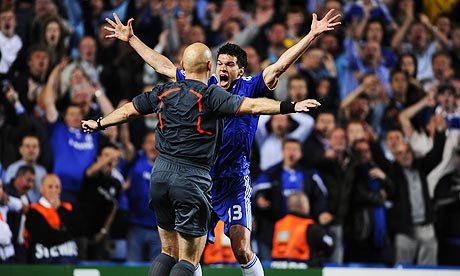
Michael Ballack Fight With Referee
Michael Ballack Expression After He Made a Score
Michael Ballack With Germany Costume
Differences of Michael Ballack
Michael Ballack Press Conferences
Michael Ballack Style

Derek Jeter

Derek Sanderson Jeter was born in 26 June 1974. He is an American professional baseball player who is currently with the New York Yankees. He is a Major League Baseball (MLB) shortstop who has played his entire career for the New York Yankees. He has served as the Yankees' team captain since 2003. Jeter's presence in the Yankees' lineup, highlighted by his hitting prowess, played an instrumental role in the team's late 1990s dynasty. Jeter debuted in the Major Leagues in 1995, and the following year he won the Rookie of the Year Award and helped the Yankees win the 1996 World Series. Jeter was also a member of championship-winning teams in 1998, 1999, 2000, and 2009. In 2000, Jeter became the only player in history to win both the All-Star Game MVP Award and the World Series MVP Award in the same year. He has been selected as an All-Star eleven times, won the Silver Slugger award four times, and he has won the Gold Glove award on five occasions. He is regarded as a consummate professional, by teammates and opponents alike, and has a reputation as a reliable contributor in the postseason. Jeter is considered to be one of the best players of his generation. He is the all-time hits leader among shortstops and his .317 career batting average through the 2009 season ranks as the fifth-highest among active players. He has been among the American League (AL) leaders in hits and runs scored for the past ten years. He is the all-time Yankees hit leader, passing Hall of Fame member Lou Gehrig in 2009.

Jeter was born in Pequannock, New Jersey in 1974. His father, Dr. Sanderson Charles Jeter, a substance abuse counselor, is African American; his mother, Dorothy, is Caucasian and of Irish/German descent. Charles and Dorothy met while serving in the United States Army in Germany. His father played shortstop at Fisk University in Tennessee. Derek has one sister, Sharlee, who is five years younger and was a softball star in high school. The family lived in North Arlington, New Jersey, before moving to Kalamazoo, Michigan, when he was four years old. As a child, Jeter and his sister spent summers with their grandparents in New Jersey, who took them to Yankees games, making him a passionate fan of his future team. Jeter was inspired to play baseball by Hall of Famer Dave Winfield. In high school, Jeter was a star baseball player at Kalamazoo Central High School, where he also played basketball, earning an All-State honorable mention. Years later in 2003, Jeter was inducted into the Kalamazoo Central High School Athletic Hall of Fame. Jeter had batting averages of .557 as a sophomore and .508 as a junior. As a senior, he batted had 23 runs batted in, 21 walks, four home runs, and 12 stolen bases (in 12 attempts); and struck out only once. Jeter collected many awards at season's end, including the Kalamazoo Area B'nai B'rith Award for Scholar Athlete, the 1992 High School Player of the Year by the American Baseball Coaches Association, the 1992 Gatorade High School Player of the Year award, and USA Today's High School Player of the Year.

Jeter spent four years in the minor leagues, beginning in the rookie-level Gulf Coast League before advancing to the Class-A Greensboro Hornets in 1992. Jeter struggled in 1992, batting .202. In 1993, playing in Greensboro, Jeter collected various awards, including Most Outstanding Major League Prospect of the South Atlantic League. He was disappointed in himself for committing 56 errors in 1993, requiring an extra focus on his fielding. Despite this, Jeter was also voted the South Atlantic League's Best Defensive Shortstop, Most Exciting Player, and Best Infield Arm by Baseball America. In 1994, Jeter played for the Class-A Advanced Tampa Yankees, the Double-A Albany-Colonie Yankees, and the Triple-A Columbus Clippers, hitting .344 with five home runs, 68 runs batted in, and 50 stolen bases combined. He was honored with the Minor League Player of the Year Award by Baseball America, The Sporting News, USA Today, and Topps/NAPBL. He was also named the MVP of the Florida State League. Jeter was discovered professionally by Hal Newhouser, who was working for the Houston Astros as a scout. Newhouser advocated his selection with the first pick of the 1992 Major League Baseball Draft to Astros' management, convinced that Jeter would anchor a winning team. Jeter received a baseball scholarship to attend the University of Michigan, and the speculation was that he would insist on a salary bonus of $1 million or more to sign.

The Yankees had projected Jeter as their starting shortstop for the 1995 season, but when he suffered a minor injury in the Arizona Fall League, the Yankees signed Tony Fernández to a two-year contract to play shortstop and kept Jeter in Triple-A. The Yankees reportedly offered Jeter the opportunity to work out with the replacement players in Spring Training prior to the 1995 season, but he declined to cross the picket line. On May 29, 1995, Jeter made his debut in the major leagues due to injuries to Fernández and Pat Kelly. Jeter batted .234 and committed two errors in 13 games before being demoted to Columbus. Despite the presence of Fernández on the roster, new Yankees manager Joe Torre announced that Jeter would be the starting shortstop in 1996. He started on Opening Day of the 1996 season as the starting shortstop (the first Yankee rookie since Tom Tresh in 1962 to do so) and hit his first major-league home run on that day. Jeter's home run was called by one of his Yankee predecessors at shortstop, broadcaster Phil Rizzuto. Jeter played his way to a successful rookie season, hitting for a .314 batting average, with 10 home runs, 104 runs scored, and 78 runs batted in. He subsequently earned Rookie of the Year honors. Jeter batted .361 in the playoffs, as the Yankees defeated the Atlanta Braves to win their first World Series championship since 1978. During the 1996 American League Championship Series, Jeter was involved in what has become a memorable moment in postseason history. During game one, with the Yankees trailing the Baltimore Orioles 4–3 in the 8th inning, Jeter hit a fly ball to right field. As right fielder Tony Tarasco moved to make a play on the ball near the fence, appearing to have a chance to catch the ball, 12-year-old Jeffrey Maier reached over the wall and caught the ball, pulling it back into the stands. Despite Tarasco's protest, the umpires convened and ruled the ball a home run. Replays conclusively showed that, had Maier not interfered, the ball would have fallen in front of the fence and potentially into Tarasco's glove for an out. The Yankees went on to win in 11 innings and eventually won the series, 4 games to 1. The ruling made for the first home run of Jeter's postseason career. In 1997, Jeter batted .291, with 10 home runs, 70 runs batted in, 116 runs and 190 hits. However, the Yankees lost to the Cleveland Indians in the Division Series. In 1998, Jeter batted .324, with a league-leading 127 runs, 19 home runs, and 84 runs batted in, for a team that won 114 games during the regular season and is widely considered to be one of the greatest of all time. In the playoffs, Jeter hit only .176 in the Division and League Championship Series, but he excelled in the World Series, batting .353, as the Yankees went on to beat the San Diego Padres in four games.

In 1999, Jeter led the American League in hits (219) and was second in the league in batting average (.349) and runs scored (134). Jeter (who, for part of the year, batted third in the lineup) also drove in 102 runs, becoming only the second Yankee shortstop ever to do so (Lyn Lary had driven in 107 runs in 1931).[23] His season totals in batting average, runs, hits, runs batted in, doubles, triples, home runs, slugging percentage (.552), and on-base percentage (.438) are all personal bests. Jeter batted .455 in the 1999 American League Division Series, .350 in the 1999 American League Championship Series, and .353 in the 1999 World Series, as the Yankees defeated the Braves to win another championship. During the 1999 season, Jeter had a confrontation with a teammate. Teammate Chad Curtis, an outspoken Christian, approached him about discussing his faith, but Jeter declined. When Curtis approached Jeter again, he became offended.[16] Later in the season, a mid-game bench-clearing brawl with the Seattle Mariners occurred. After the brawl ended, Jeter was seen engaged in friendly chatter with his good friend (and future Yankee teammate) Alex Rodriguez, who then played for the Mariners. Upon returning to the dugout, Curtis chastized Jeter for being friendly with an opponent during a bench-clearing brawl, which violated an unwritten rule of baseball. After the game, Curtis approached Jeter in the clubhouse, with beat writers present. Jeter commented that this was not an appropriate time for a confrontation. Curtis later apologized. During the 1999–2000 offseason, the Yankees negotiated with Jeter, tentatively agreeing to a $118.5 million, seven-year contract.[25] Yankee owner George Steinbrenner did not want to set a salary record, delaying until the acceptance of a $143 million, eight-year contract extension between the Detroit Tigers and Juan González. When that proposed deal fell through, Jeter's tentative deal fell through, and he agreed to a one-year deal for $10 million. Jeter batted .339, with 15 home runs, 73 runs batted in, 119 runs scored, and 22 stolen bases in 2000. He batted only .211 in the Division Series but rebounded to bat .318 against the Seattle Mariners in the Championship Series and .409, with two home runs, a triple, and two doubles in a five-game series against the New York Mets in the World Series, the first Subway Series since 1956. In 2000, Jeter became the first player ever to win the All-Star Game MVP award and the World Series MVP Award in the same year. Jeter became the first Yankee since Yogi Berra, in 1959, to hit a home run in the All Star Game. Before the 2001 season, with one year remaining until he would become eligible for free agency, Jeter signed a $189 million, ten-year contract to remain with the Yankees, making him the second highest paid athlete, trailing only Rodriguez. Rodriguez signed his deal earlier than Jeter, setting a higher market for Jeter's negotiations. During the season, Jeter batted .311, with 21 home runs, 74 runs batted in, 110 runs scored, and 27 stolen bases. In the postseason, Jeter made a notable play in game 3 of the 2001 American League Division Series against the Oakland Athletics. With Jeremy Giambi on first base, Oakland right fielder Terrence Long hit a double off Yankees pitcher Mike Mussina into the right-field corner. As Giambi rounded third base and headed for home, Yankees right fielder Shane Spencer retrieved the ball and made a wild throw intended for Yankees catcher Jorge Posada. Instead, the errant throw missed cutoff man Tino Martinez and dribbled up the first-base line. Jeter came from shortstop to grab the ball and flipped it to Posada, who tagged Giambi on the leg just before he crossed home plate for the out. Facing elimination, the Yankees went on to win the game, as well as the series. The play was later voted #7 in Baseball Weekly's 10 Most Amazing Plays of all time. After the September 11 terrorist attacks, the baseball season was put on hold. As a result, the start of the playoffs was delayed, and game 4 of the 2001 World Series was played on October 31. The game went into the tenth inning tied at 3–3. At midnight, the scoreboard in center field read "Attention Fans, Welcome to NOVEMBER BASEBALL." This was the first time that any non-exhibition MLB game had been played in the month of November. Moments after this message was displayed on the board, Jeter sent a 3–2 pitch from Byung-Hyun Kim over the right-field stands. A fan in the stands held up a sign with the words "Mr. November," a reference to Reggie Jackson's nickname, "Mr. October". Michael Kay, who called the walk-off home run, called Jeter by this name, referencing the sign. Despite the nickname, Jeter was 3 for 12 (.250) in November baseball that season, as the Yankees lost the World Series in seven games to the Arizona Diamondbacks (the home team won all seven games of the World Series). In 2002, Jeter batted .297, with 18 home runs, 75 runs batted in, 124 runs scored, 191 hits, and a career-best 32 stolen bases. He led the majors in stolen base percentage (91.4%), getting caught only three times.

In 2003, Jeter dislocated his left shoulder on opening day when he collided with Blue Jays catcher Ken Huckaby at third base. Jeter, who had never played fewer than 148 games in the prior seven full seasons, was subsequently on the disabled list for six weeks, missing 36 games. Jeter returned to bat .324, losing the batting title to Bill Mueller, who batted .326. Steinbrenner named Jeter the 11th recognized captain in Yankees history on June 3, 2003, following eight seasons without a captain after the retirement of Don Mattingly in 1995. Dispute over the true count has been noted. The beginning of the 2004 season saw Jeter mired in a slump; on May 25, he was hitting only .189. This included a personal career record 0-for-32 skid in April. In June Jeter broke out of his slump. He hit nearly .400 for the month and set a personal best with 9 home runs. He finished the season with a .292 average; 23 home runs, the 2nd most of his career; 78 runs batted in; 111 runs scored; and 44 doubles, a career best. During a July 1, 2004, game against the rival Boston Red Sox, Jeter made a play that furthered his reputation as a clutch player. In the top of the 12th inning, with the score tied at 3, the Red Sox had runners on second and third with 2 outs and right fielder Trot Nixon up at bat. Nixon hit a pop fly down the left field line. Jeter ran from his position at shortshop and made an over-the-shoulder catch. In dramatic fashion, he launched himself over the third-base side railing, landing three rows into the left-field seats, and lacerating his chin and bruising his face in the process. Jeter was later taken out of the game. This catch ended the inning, and later the Yankees went on to win the game in the bottom of the 13th inning. The "Dive" was awarded Play Of The Year in the This Year In Baseball awards competition, as voted on by fans at MLB.com. In 2005, Jeter was second in the AL in both runs scored (122) and batting average on balls in play (.394), and was third in the league in both at bats (654) and hits (202). Jeter won his second-consecutive Gold Glove in 2005, as his low range factor rose to 4.76 and ranked 2nd among AL shortstops. In 2006, Jeter was second in the AL in both batting average (.343) and runs scored (118); was third in hits (214), stolen base success percentage (87.2), and batting average with runners in scoring position (.381); and was fifth in infield hits . He finished second in American League Most Valuable Player Award voting to Justin Morneau of the Minnesota Twins (320 points to 306 points). Jeter has finished in the top 10 in the MVP balloting 6 times in his 11 full seasons through 2006 (including also a third-place finish in 1998). In 2007, Jeter was third in the AL in hits (203), his sixth season and third-consecutive season with 200 hits, tying Lou Gehrig. He was also fourth in both at-bats (639) and plate appearances (714), sixth in times on base (276), and ninth in batting average (.322). In the field, he was involved in a career-high 104 double plays.

LinkWithin

Related Posts Plugin for WordPress, Blogger...